
The Climb at Beth Shean: Rising When Life Hurts Most
By Wilson Alvarez
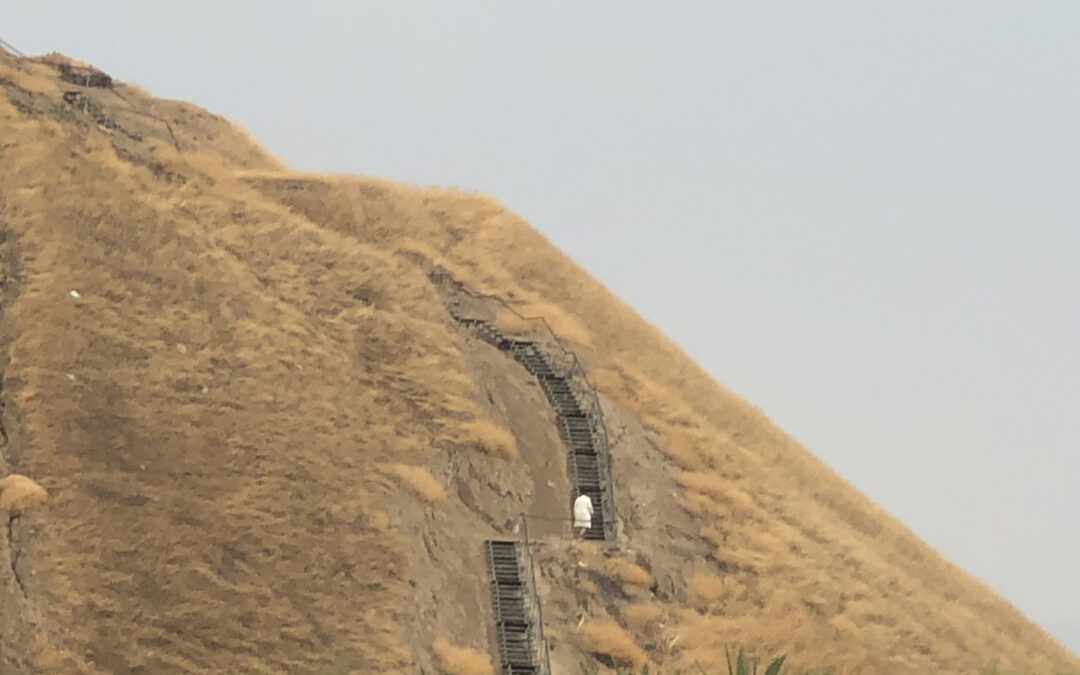
In November 2018, the air in Israel carried a quiet stillness, as if the land itself was holding its breath. I stood at the base of Tel Beit She’an, an ancient mound that rises about 80 meters (260 feet) above the valley floor — a place layered with more than 5,000 years of history. The ruins of Scythopolis, once a grand Roman and Byzantine city, stretched before me like the bones of time — marble columns, mosaic floors, and echoes of civilizations long gone.
Six months earlier, I was recovering from Achilles tendon surgery. At that time, every step felt like an uphill battle, both physically and emotionally. I was also in the midst of a divorce, wrestling with heartbreak and uncertainty. It was one of those seasons when the noise of life becomes deafening, and yet, somehow, God whispers through the silence.
That day, I decided to climb.
Each stair leading up the tel became a symbol — not of strength, but of perseverance. The sun pressed down at around 75°F (24°C), and the dry air carried the scent of ancient dust. My calf throbbed, my chest burned, and my breath came shallow. Yet with every push forward, I felt something inside me loosen — not pain, but release.
Halfway up, I stopped and turned around. Below me lay the vast expanse of Beit She’an National Park, its columns lined like sentinels, its amphitheater whispering of lost empires. The contrast was surreal — the ruins below, the open sky above, and me somewhere in between, suspended in a moment that felt both ancient and personal.
At the summit, the view took my breath away. The Jezreel Valley unfolded before me, glowing gold under a fading sun. I thought of King Saul, whose body was once hung on these walls after his final battle — a tragic story of defeat that time transformed into a lesson on endurance.
But here’s the remarkable truth: even at the very top of Tel Beit She’an, you’re still below sea level — about 40 meters (130 feet) below it, in fact. The Beit She’an Valley itself lies roughly 120 meters (394 feet) below sea level, one of the lowest inhabited regions on Earth.
And yet, from that position beneath the world’s surface, I felt like I was on top of it.
That paradox has stayed with me. Sometimes in life, we rise not by climbing above others, but by finding peace below the surface — in the quiet depths where humility, pain, and faith meet. My climb wasn’t about reaching altitude; it was about attitude. About rising in spirit when life’s circumstances have buried you deep.
In that moment, my past didn’t vanish, but it lost its hold. I stood there — a man recovering from surgery, navigating heartbreak, standing below sea level yet feeling closer to heaven than I had in years.
The world in 2018 was full of noise — political divisions, the #MeToo movement reshaping culture, peace talks in the Middle East, and a society chasing speed over stillness. But on that hill, there was only silence, sun, and grace. And in that silence, I heard the only thing that mattered:
Keep climbing. You’re not finished yet.
Recent Comments