September 11, 2001: A Day That Changed the World — and a Trip That Changed Us
A New York journey of resilience, family, and lessons I want my children to remember
“History isn’t just what happens to the world — it’s what happens to your family while the world is changing.”
TL;DR – A post-9/11 family trip to New York City in December 2001 became a living lesson in resilience, culture, economic participation, and intentional parenting — during one of the most uncertain moments in modern history.
September 11, 2001 — Where We Were When Everything Changed
September 11, 2001, is etched into history as one of the most devastating days not only for America, but for the world. It reshaped global politics, national security, and the collective sense of safety we once took for granted.
For me, that day is inseparable from where I was and who I was with.
That morning, I was working at the Florida Shoe Show at the Merchandise Mart in Miami — a building that, at the time, also housed the World Trade Center Miami offices. The atmosphere was energetic and busy. My family and I were staying at the Radisson Hotel, where the show was being hosted, and we were scheduled to remain there through the following Monday.
By 9:00 a.m., everything stopped.
The news broke that planes had struck the Twin Towers in New York City. As the images replayed and the gravity of what was happening became clear, I remember turning to my mother, who was with us, and saying without hesitation:
“We’re taking the kids home. Now.”
With World Trade Center offices just floors away, fear took over — not panic, but a primal instinct to protect. That decision had nothing to do with logic or schedules. It had everything to do with family.
The Aftermath: Uncertainty, Fear, and an Unexpected Call to Act
The months that followed 9/11 were heavy. For those of us who were self-employed, the economic slowdown was real and immediate. My IT business felt the impact almost overnight.
Then, in December 2001, President George W. Bush addressed the nation with a message that surprised many people. He encouraged Americans to travel, to participate in commerce, and to support cities that were hurting — especially New York.
That message stayed with me.
Travel wasn’t easy. Money was tight. But something about that call felt important. I wanted my children — even if they were too young to fully understand — to be part of healing through presence, not fear through withdrawal.
So we booked a trip to New York City.
A New York Christmas: December 26–30, 2001
We flew to New York on December 26, 2001. It had snowed the night before, leaving the city slushy and gray. We hoped for fresh snowfall during our stay, but it never came — until the day after we left. Still, the cold, the steam rising from the streets, and the winter air made the city feel unmistakably New York.
We stayed at the Park Lane Hotel, directly across from Central Park — a perfect location for walking, exploring, and letting the city unfold naturally.
Central Park Ice Rink — And a Small Miracle
One of our first stops was the Central Park ice skating rink. The line was long, and time was not on our side — especially on the last day, when our flight wasn’t until late afternoon and airport security lines were overwhelming.
It looked like skating wasn’t going to happen.
Then Mom stepped in.
In what can only be described as a quiet miracle, she managed to work her way to the front, ensuring the kids got on the ice. It mattered — because neither of you had ever seen snow before, let alone skated on ice.
Despite having recent back surgery, I joined you, carefully, deliberately — because some moments are worth the risk.
FAO Schwarz and Making the Trip About You
We made a conscious effort to make this trip about the kids.
FAO Schwarz wasn’t just a toy store — it was wonder on display. It reminded me that even in a city recovering from tragedy, joy still had a place.
Food, Culture, and Quiet Lessons
Noodles 28
One of the most memorable meals was at Noodles 28, a Chinese restaurant hidden in a basement. The furniture looked like it hadn’t changed since the 1960s. Everyone spoke Chinese. The food was extraordinary.
We loved it.
Without realizing it, you were learning that culture doesn’t need translation to be appreciated.
Sparks Steakhouse
At Sparks Steakhouse, famous for both its food and its history (including the assassination of mob boss Paul Castellano), I enjoyed a classic surf-and-turf. The elegance of the place and its layered past reminded me how deeply history lives inside New York’s walls.
Bagels, Pizza, and the Water
I explained something to you that I want to restate now — because it’s true:
New York City has some of the best municipal water in the United States.
Sourced from the Catskill and Delaware watershed systems, the water is soft, with low calcium and magnesium levels. This affects gluten development and fermentation — which is why New York bagels and pizza have a texture and flavor that’s hard to replicate anywhere else.
Even food tells a story when infrastructure is done right.
The Street Artist
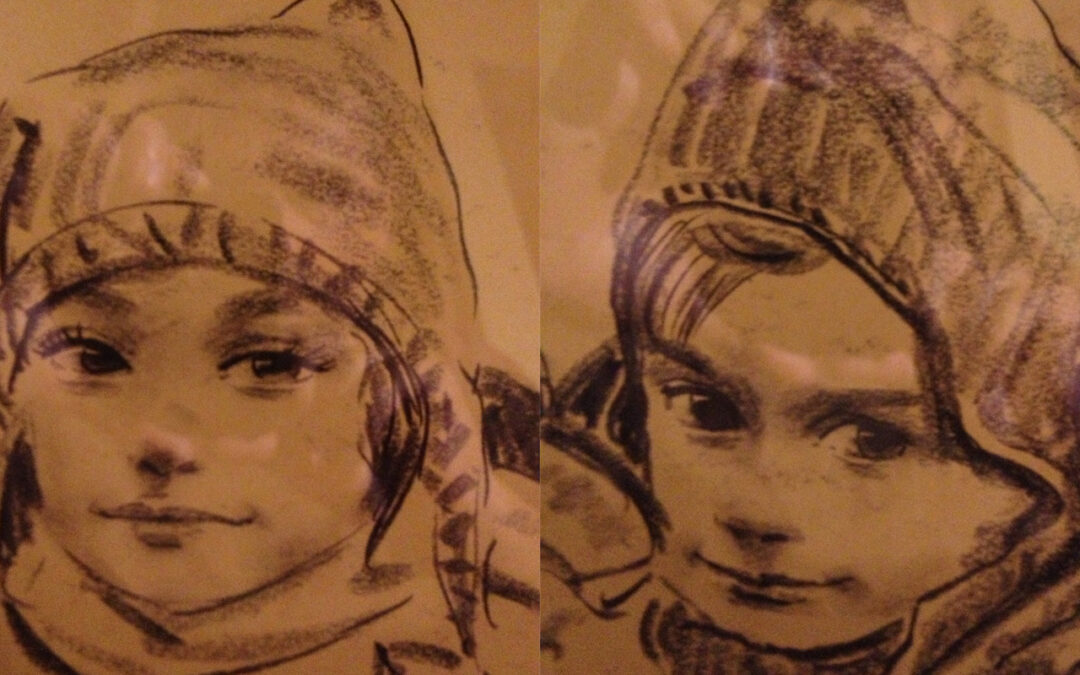
A street vendor sketched Janelle & NeneWil using charcoal sticks — thick, bold, imperfect lines. That portrait now sits as the hero image of this story.
Art doesn’t need permanence.
It needs presence.
Blue Man Group: When Parents Love It and Kids Don’t
We saw the Blue Man Group in a smaller New York venue, sitting front row. I had seen them before in Las Vegas and loved them again. The kids? Not so much.
The ponchos.
The paint.
The Captain Crunch shower.
You didn’t like it — and that’s okay.
I still bought two pairs of drumsticks from that performance. Not souvenirs — reminders that shared experiences don’t require shared opinions.
Personal Connections and What We Couldn’t See
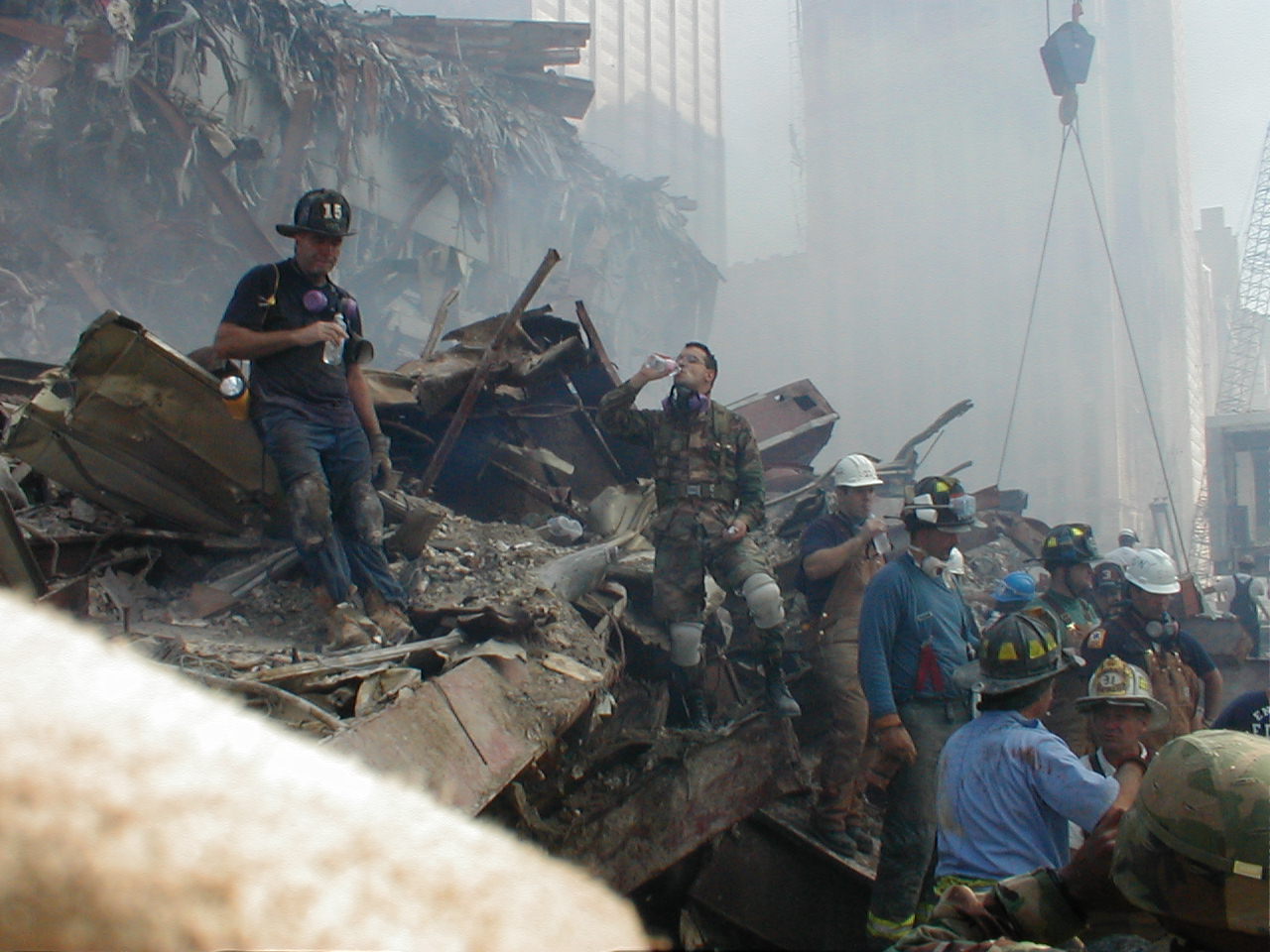
My cousin Leo Montiel was involved in the recovery efforts after 9/11. Hearing his stories gave the trip a deeper gravity.
We couldn’t visit the Statue of Liberty due to heightened security, but its symbolism followed us everywhere.
Why This Matters Now
You were six and seven years old. You don’t remember most of this.
But I do.
And I want you to understand what that trip really was:
-
A choice to participate, not retreat
-
A lesson in resilience over fear
-
An example of making family the priority
-
Proof that even during uncertainty, life continues
Sometimes the most important lessons are lived — not explained.
Reflection and Resilience
Our trip to New York was more than a vacation; it was a testament to resilience and the enduring spirit of the city and its people. My cousin Leo Montiel was part of the recovery efforts after the 9/11 attacks, and hearing his stories added a personal connection to our visit. Although we couldn’t visit the Statue of Liberty due to heightened security, we carried the significance of the trip in our hearts.
A Note on Water and Memories
New York’s water, often cited as the secret ingredient behind its unparalleled pizza and bagels, is soft water with low concentrations of calcium and magnesium. This creates a unique texture in the dough, elevating its taste and consistency.
As I recount these memories, I’m filled with gratitude for the time spent with my family, the adventures we shared, and the resilience we witnessed. September 11th changed the world, but it also reinforced the importance of cherishing our loved ones and embracing life’s experiences.
This story is a piece of our family’s history, a reflection of a journey through a momentous time.
Recent Comments